How to Get Rid of Dog Hair in a Washing Machine: 8 Effective Steps That Work
To get rid of dog hair in a washing machine effectively, first remove any visible hair from the drum, then use the dryer to catch loose fur before washing. Regularly cleaning your washer’s filter and drum helps prevent hair buildup and clogs. This approach saves your machine and keeps your laundry free from stubborn dog hair.
This advice is for dog owners dealing with pet hair in their laundry machines. You’ll learn practical steps to remove hair from the washer, prevent clogs, and improve washing results with easy, repeatable methods.
Key Takeaways
- Remove dog hair from the washing machine drum by wiping it with a damp cloth after each load.
- Run clothes in the dryer on no heat for 10 minutes before washing to trap loose dog hair in the lint filter.
- Keep the washing machine door and detergent drawer open for several hours to allow thorough drying and hair removal.
- Clean the washer’s filter and drain every 1 to 2 months to prevent hair from clogging the machine’s plumbing.
- Add ½ cup of white vinegar to wash cycles to help loosen dog hair from fabrics and prevent buildup in the washer.
- Use hair removal tools or lint rollers on laundry before washing to reduce the amount of hair entering the machine.
1. How to Remove Dog Hair from Your Washing Machine Drum
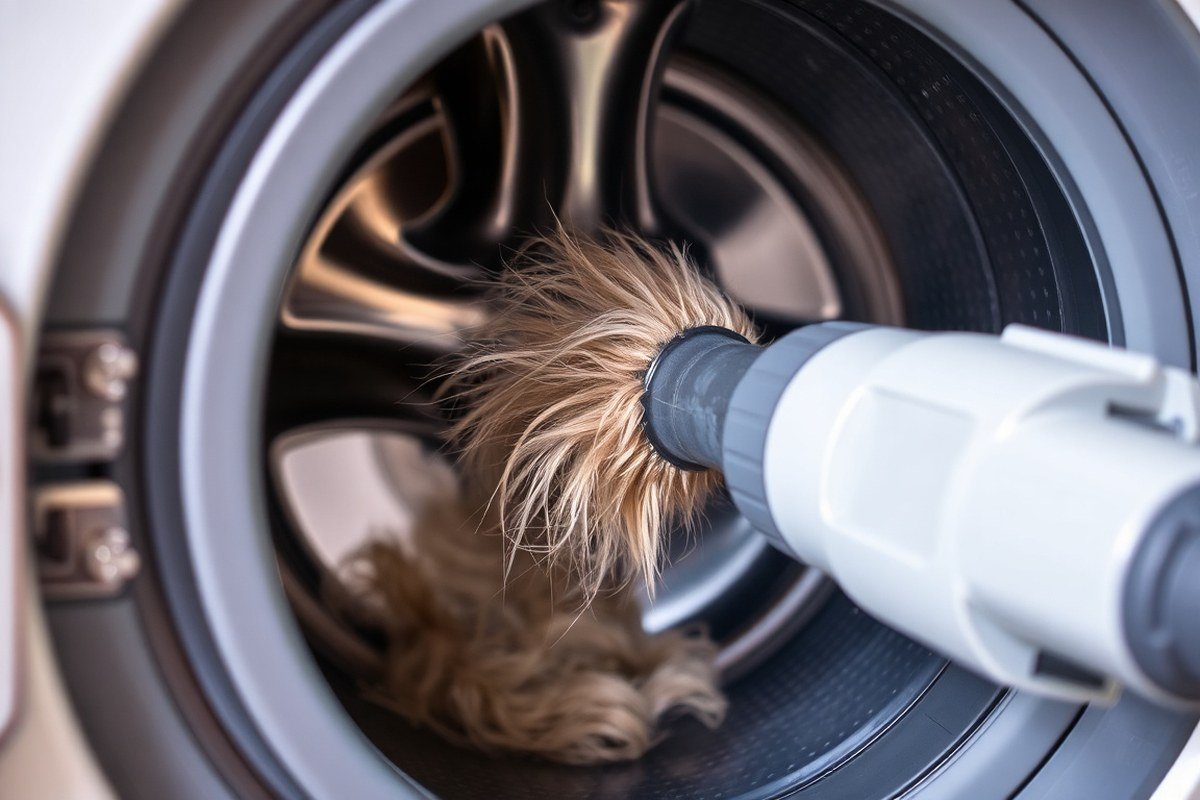
Dog hair inside the washing machine drum and door seal can cause your laundry to come out covered in fur. Removing this hair regularly keeps your machine clean and prevents hair from redepositing on clothes. It’s best to do a thorough cleaning every 1-2 months, or more often if you wash heavily soiled pet bedding or blankets.
For effective removal, you’ll need a vacuum with a brush attachment, a microfiber cloth, and a lint roller or sticky pet hair remover. These tools help physically pull hair from hard-to-reach places where it clings. Leaving the drum dry before cleaning ensures hair is loose and easier to pick up.
- Let the drum dry completely. Start with an empty, dry washing machine to prevent hair from sticking to wet surfaces. Leave the door open for a few hours if needed.
- Vacuum the drum interior. Use a vacuum with a brush attachment to gently vacuum the inside surface of the drum. Focus on crevices and the door seal where hair tends to collect. Take your time to remove as much loose fur as possible.
- Use a lint roller or sticky tape. For any remaining hairs stuck inside the drum or on the door seal, roll over these areas with a lint roller or press sticky tape to lift off stubborn strands.
- Wipe the door seal and drum. Dampen a microfiber cloth slightly and wipe down the rubber door seal and drum surface. This captures fine hairs that vacuuming misses.
- Clean the washing machine filter and drain pump. Dog hair often collects here and causes clogs. Removing and rinsing the filter every month or two can prevent buildup.
- Run a hot water maintenance cycle. After hair removal, run an empty cycle with the hottest water setting recommended by the manufacturer. This flushes out loosened hair and residue.
- Keep your washing machine door open between uses. This helps reduce moisture buildup that causes hair to stick and makes cleaning easier next time.
Regularly vacuuming and wiping the drum prevents hair from building up and ensures the washing machine stays in good working condition. Skipping these steps can lead to hair redepositing on clean clothes and clogged filters, which may require professional repairs. By spending about 10 to 15 minutes every month or so on this cleaning routine, you keep your laundry free of dog hair and extend the life of your washer.
2. Why Pre-Wash Hair Removal Is important and How to Do It

Removing loose dog hair from your laundry before washing is key to preventing buildup in your washing machine and keeping your clothes hair-free. If you skip this step, pet hair can transfer to other clothes during the wash cycle, making the problem larger and clogging your machine’s filter and drain. Pre-washing hair removal reduces the amount of hair that even reaches the washer drum, which helps keep your machine running well and makes washing more effective.
Several tools and tricks can help remove dog hair before washing. Brushing or grooming your dog regularly lowers shedding at the source. For clothes and fabric, lint rollers or sticky rollers grab loose hair quickly and are convenient for small loads or delicate items. Drying dog-hair-covered clothes first in a dryer on a low-heat setting helps loosen hair before transferring the clothes to the washing machine. Combining these steps limits hair transfer within the washer and makes laundry easier to clean. The table below compares common pre-wash dog hair removal methods by effort and effectiveness to help you pick the best option for your laundry routine:
| Method | Effort Required | Effectiveness at Removing Dog Hair | Additional Notes |
|---|---|---|---|
| Brushing/Grooming Dog | Moderate (requires time with your dog regularly) | High (reduces overall hair that enters laundry) | Best done daily or several times a week |
| Lint Roller/Sticky Roller on Clothes | Low (quick for small loads) | Moderate to High | Works best on visible hair; less effective on fine embedded hair |
| Drying Clothes Before Washing | Low to Moderate (adds extra cycle) | Moderate (loosens and removes loose hair) | Use low heat to prevent damage; clean lint trap after |
| Using Pet Hair Brushes on Clothes | Moderate | Moderate | Effective but may require several passes |
Removing as much pet hair as you can from clothes before washing helps keep hair from spreading and clogging your machine’s filter.
Combining these techniques improves your results. For example, after brushing your dog, use a lint roller on clothes before washing, or run a quick dryer cycle on hairy items first. Avoid overloading the washer since a packed drum lowers the detergent’s effectiveness and makes it harder to remove pet hair. Regularly clean your washing machine’s filter and drum to prevent buildup and maintain efficiency.
3. Using the Dryer First: The Key Step for Loose Dog Hair
Drying your clothes on a no-heat cycle before washing loosens dog hair effectively by tumbling loose fur free from fabric fibers. This method captures up to 80% of the dog hair in the dryer’s lint trap, which keeps hair from clogging your washing machine’s plumbing. Running a 10-minute air fluff cycle prevents hair buildup inside your washer and improves overall cleaning results.
Choosing the Right Dryer Setting
Select the “no heat,” “air fluff,” or “air dry” setting on your dryer to avoid shrinking or damaging your clothes during the pre-wash treatment. Heat can cause pet hair to embed deeper into fabric fibers, making removal harder. The air-only setting tumbles your clothes to loosen hair without applying heat, which is key for effective pet hair removal.
Use this setting even on delicate fabrics, bedding, or heavily covered dog items to ensure the hair loosens safely before washing. Avoid high heat or regular drying cycles during this step since heat can make hair stick more tightly and reduce the effectiveness of your next wash.
Timing and Monitoring the No-Heat Cycle
Run the dryer with your laundry load on the no-heat cycle for about 10 minutes. This duration is usually enough to dislodge most loose hairs and collect them in the lint trap. Monitor the process occasionally to avoid tangling or overheating, especially with smaller or delicate loads.
If your load is very large or heavily covered with dog hair, consider splitting it into smaller loads to allow better tumbling and hair removal. Repeat the no-heat drying cycle as needed before washing if you notice a lot of loose pet hair still clinging to your clothes.
Emptying the Lint Trap Properly
After the no-heat drying cycle, clean out the lint trap thoroughly to remove the collected dog hair. Emptying it prevents hair from blowing back onto your clothes during the final wash or accumulating inside your dryer over time.
Use your hands or a vacuum with a brush attachment to clear the lint trap and its housing completely. Failing to clean the lint trap properly can reduce the hair removal benefits and pose fire hazards, so this step is essential for both cleanliness and safety. Follow these steps to use the dryer pre-treatment effectively:
- Gather your dog-hair covered laundry and check the dryer lint trap is clean.
- Place the clothes in the dryer, avoiding overloading to maximize tumbling action.
- Select the “no heat,” “air fluff,” or “air dry” cycle on your dryer.
- Run the dryer for 10 minutes, watching for any issues with the load.
- Stop the dryer and remove clothes; shake or shake out items to dislodge remaining hair.
- Empty the lint trap completely to dispose of collected dog hair.
- Proceed to wash your clothes, ideally using a vinegar rinse or pet hair trap in the washer.
- Repeat the pre-dry step if necessary before future washes to maintain machine cleanliness and reduce clogs.
4. Best Washing Machine Settings and Additives to Handle Dog Hair
To best remove dog hair from laundry, use longer wash cycles like “heavy duty” or “bulky” that give fabrics more time to shed hair. Warm water with temperatures around 90°F to 110°F helps break down hair proteins better than cold water. Adding half a cup of white vinegar to your wash reduces static cling and loosens hair. Choose detergents formulated with enzymes or boosters designed for pet hair to improve removal.
Warm Water and Temperature Recommendations
Warm water works better to tackle dog hair because it helps break down keratin, the protein that makes hair cling to fabrics. Aim for a wash temperature between 90°F and 110°F, which is warm enough to loosen hair but safe for most clothing. Avoid hot water unless your clothing labels allow, as it can shrink or damage some fabrics.
Use wash cycles with longer durations like “heavy duty” or “bulky” so the machine agitates the clothes more thoroughly and allows hair to be rinsed away. Extended cycles give detergent and additives more time to work on detaching hair.
Choosing and Using Vinegar and Baking Soda
White vinegar is one of the most effective additives for loosening pet hair in the wash. Adding ½ cup directly to the wash cycle reduces static cling, which otherwise makes hair stick stubbornly to fabrics. Vinegar also dissolves residues that attract hair, improving overall cleaning.
Baking soda helps primarily with odor control and breaking down any buildup inside the washer. You can add ½ cup to the wash cycle to supplement detergent and keep your machine fresher, which indirectly supports hair removal.
| Method | Description |
|---|---|
| White Vinegar | Add ½ cup to the wash cycle to reduce static and help loosen dog hair |
| Baking Soda | Add ½ cup to help remove odors and break down built-up debris |
| Washing Machine Cleaner | Use periodic cleaner cycles with products like Affresh to remove residue |
| Detergent Booster | Use boosters such as OxiClean to improve stain and hair removal |
Regular use of vinegar and occasional baking soda supports cleaner fabrics and washers, reducing pet hair problems over time.
Pros and Cons of Fabric Softeners
Fabric softeners can reduce static cling, which makes pet hair less likely to stick during washing and drying. Adding softener to the dispenser at the start of the wash cycle helps loosen hair on clothes.
Using excessive fabric softener or dryer sheets may leave a sticky residue on your laundry that draws in pet hair, making it tougher to clean. Opt for products specially formulated to cut down on static cling and pet hair instead of regular softeners.
Selecting Detergents for Pet Hair
Choose detergents with enzymes or additives targeted at breaking down pet hair proteins. These formulations not only clean but also help dissolve and loosen hair embedded in fabrics. Some detergents include odor neutralizers that improve freshness.
Not all detergents work equally well on dog hair, so check labels for mentions of pet hair removal or enzyme content. Combining specialized detergent with vinegar and the right cycle settings delivers the best results.
5. Cleaning and Maintaining Washer Filters and Drain to Prevent Hair Clogs
Dog hair tends to accumulate mainly in the washing machine’s drain pump filter and drain hoses, which can lead to clogs and malfunctions. Cleaning these parts regularly stops buildup and keeps your machine running efficiently. Proper maintenance involves locating, removing, and cleaning the drain pump filter and occasionally checking the drain hose for trapped hair.
Locating the Drain Pump Filter
The drain pump filter is usually found at the front or bottom right corner of your washing machine, behind a small access panel. It captures debris, including dog hair, before the water drains out. Knowing where this filter is helps you prevent blockages that reduce the washer’s performance and avoid costly repairs.
Before you start cleaning, unplug your machine and place an old towel or shallow container under the filter to catch any water that leaks out. Consult your washer’s manual if you’re unsure where the filter is, since designs vary by brand and model.
Removing and Cleaning the Filter
Follow these steps to safely remove and clean the drain pump filter. This routine typically takes about 10 to 15 minutes and costs nothing but your time. Ideally, clean the filter every 5 to 10 washes, especially if your dog sheds heavily or you wash pet bedding frequently.
- Turn off and unplug the washing machine to prevent electrical shock.
- Open or remove the access panel located near the base of the washer.
- Place a shallow dish or towel under the filter to catch water spills.
- Turn the filter knob counterclockwise to unscrew and pull it out gently.
- Remove any visible dog hair, lint, or debris by hand or with a soft brush.
- Rinse the filter under warm running water (around 100°F) to clear out remaining dirt.
- Check inside the filter housing for leftover hair and wipe it clean with a damp cloth.
- Reinsert the filter by screwing it back clockwise until snug, then close the panel.
Never force the filter if it won’t turn easily; forcing it can cause damage, check your manual for specific directions.
Running Regular Cleaning Cycles
Alongside manual cleaning, running a monthly cleaning cycle helps remove stray hair and residue from inside the washer. Use a washer cleaner or a cup of white vinegar in an empty hot water cycle to break down buildup that may hide in the plumbing, pump, and seals. A clean washing machine not only handles dog hair better but also prevents odors and mold growth.
For pet owners, combining routine filter cleaning with full-cycle maintenance keeps hair from clogging drains and pump parts that can cause breakdowns. Remember, hair trapped in the rubber seals and gaskets also needs checking during these maintenance sessions to stop gradual accumulation that affects washing quality.
6. Preventing Dog Hair Build-Up: Daily and Long-Term Laundry Habits
Keeping dog hair from building up in your washing machine relies on consistent habits in both pet care and laundry routines. Regular grooming is the most effective way to reduce shedding. Brushing your dog daily removes loose hair before it gets on clothes or bedding. Bathing your pet with a hair-friendly shampoo once a month also helps by cleaning and loosening dead fur. Including omega-3 fatty acid fish oil supplements in your dog’s diet may reduce shedding slightly, but keep in mind there is no guaranteed quick fix for shedding control.
Managing laundry schedules can cut down hair accumulation too. Wash pet bedding and heavily soiled items separately from regular clothes to avoid spreading hair and dirt. Using a pre-wash or rinse cycle can loosen hair on fabrics before the main wash. Washing large pet blankets or cushions monthly prevents excessive hair from settling in your machine.
Routine machine use and maintenance matter a lot. Running your washer on a warm cycle helps dissolve oils and loosen hair strands embedded in fabrics. After washing pet-related laundry, run an empty rinse cycle with a cup of white vinegar once a month to minimize hair residue and prevent odors. Check and clean the lint filter or pump trap monthly to avoid clogs from accumulated hair.
- Brush your dog daily with a suitable brush for your breed
- Feed omega-3 supplements as recommended by your vet
- Wash pet bedding separately and monthly
- Use warm water for pet laundry cycles
- Run an empty rinse cycle with 1 cup white vinegar monthly
- Clean washing machine lint filter or trap every month
- Pre-rinse heavily soiled dog items before washing
Focusing on these actions creates a system where dog hair is controlled before it enters the washer, reducing buildup on clothes and inside the machine. Over time, this prevents both the frustration of pet hair-covered laundry and the risk of mechanical problems caused by hair clogs. Depending on your dog’s shedding level and the size of your household, adapting these tips to your schedule and budget can keep your laundry routine smoother and your washer in better condition.
7. Do Pet Hair Catchers and Washing Machine Accessories Really Work?
Pet hair catchers and washing machine accessories can help reduce dog hair cling on your laundry, but their effectiveness varies. Popular products include Fur Zappers, laundry balls, and lint traps designed to catch pet hair during the wash or dry cycle. These tools target loose hair that remains on clothes after pre-wash removal steps.
Fur Zappers are silicone or rubber discs that you place inside the washing machine drum. They attract and trap pet hair by creating friction and static, helping to prevent hair from sticking to your clothes. Lint traps are typically mesh filters or bags either inside the washer drum or attached to the washer’s drain system. They physically catch hair floating in the water or hair that loosens but might otherwise clog the drain.
| Accessory | How It Works | Best For | Cost Range (USD) | Maintenance |
|---|---|---|---|---|
| Fur Zappers | Rubber discs that attract hair via friction and static | Top-loading washers, mixed fabric loads | $5 – $15 | Rinse after each use, check for hair buildup |
| Laundry Balls | Plastic or rubber balls that agitate clothes; reduce hair cling indirectly | Dryers (not washers), minor hair presence | $10 – $20 | Clean regularly to keep them effective |
| Lint Traps/Filters | Mesh bags placed in drum or screen filters catching loose hair in water | Top and front loaders, heavy hair loads | $10 – $30 | Empty and wash after each cycle |
These products are worth investing in if you struggle with dog hair that sticks tightly to fabrics and consistently returns after washing. Fur Zappers tend to work better in top-loading machines by actively collecting hair, while lint traps help prevent machine clogs caused by hair buildup in the drain system. Laundry balls primarily aid drying, not washing, but can complement hair removal efforts.
To get the best results, add a Fur Zapper or lint trap before starting the wash cycle. Remove trapped hair manually after each wash and rinse the accessory to maintain efficiency. Skipping this step reduces their effectiveness and can cause excess pet hair to go back onto your laundry or clog the washer. Keep an eye on the load size and type, since smaller, more heavily soiled loads may need stronger pre-wash hair removal techniques combined with these accessories for noticeable improvement.
8. Common Mistakes That Increase Dog Hair Problems and How to Fix Them
One common mistake that makes dog hair problems worse is overloading the washing machine. Cramming too many pet hair-covered items limits water flow and agitation, so hair clumps stay stuck on fabrics instead of rinsing off. Wash smaller loads that fill no more than about 75% of the drum space. Doing so gives water and detergent room to loosen and remove hair properly. Overloading not only leaves hair on clothes but also leads to buildup inside the machine over time.
Neglecting regular cleaning of your washer is another key issue. Dog hair, along with detergent residue and fabric softener, can accumulate inside the drum and filters. This buildup traps more hair with each wash cycle, worsening the problem. Clean the drum monthly using a washing machine cleaner or run an empty hot water cycle with white vinegar. Also, remove and rinse the lint filter every few washes to maintain proper drainage and reduce hair traps.
Skipping the use of fabric softener can cause more hair to cling to clothes. Fabric softeners reduce static cling, helping loosen pet hair so it rinses away instead of sticking. Add about ¼ cup of liquid fabric softener during the rinse cycle or use dryer sheets when drying to decrease hair adhesion and make pet hair removal easier.
Failing to pre-treat or remove loose dog hair before washing is a frequent error. Hair on clothing and bedding tends to clump once wet and embed in fibers. Brush or shake off as much loose hair as possible before loading items into the machine. Using a lint roller or pet hair remover tool on dry fabrics makes a big difference in how much hair ends up in the washer and on your clothes after washing.
- Overloading the washer: use smaller loads to improve rinsing and prevent clumps
- Ignoring regular machine cleaning: run a monthly cleaning cycle and rinse lint filters
- Not using fabric softener: add it to rinse cycle to reduce static cling and hair adhesion
- Skipping pre-wash hair removal: brush or roller off loose hair before washing
- Washing pet hair-covered items with incompatible fabrics: separate heavy hair coverage from delicate items
- Using cold water only: include warm water cycles around 90°F (32°C) to loosen hair fibers
- Leaving wet clothes in machine after washing: promptly dry or remove to prevent hair redeposit
Always clean your washer’s lint trap and run a hot cleaning cycle every month to avoid buildup that traps dog hair inside the machine.
Mixing heavily pet hair-covered items with more delicate fabrics can cause hair to transfer dangerously between different types of laundry. Wash very hairy items separately in warm water around 90°F to help dissolve oils and loosen hair. Promptly remove washed clothes to avoid wet hair sticking back on fabrics. These habits help break the cycle of hair buildup and maintain your washing machine’s effectiveness over time.
Step-by-Step Action Plan
Follow these steps in order to remove dog hair effectively from your washing machine and keep it under control for future loads.
- Before you start: Use a dryer on the clothes with no heat to loosen and remove as much hair as possible. Check if visible hair has significantly decreased.
- Day 1: Manually wipe the washing machine drum and door seal with a damp microfiber cloth to remove stuck hair. The drum should look visibly cleaner.
- Day 1, after wiping: Run an empty hot water cycle with a cup of white vinegar to help dislodge stubborn hair and clean residue. The cycle should finish without visible clumps of hair in the drum.
- Day 2: Vacuum or clean the washer’s lint trap and filter compartments thoroughly. These areas should be free of hair buildup after cleaning.
- Weekly laundry: Before washing clothes with dog hair, use a lint roller or pet hair remover brush on the laundry to reduce loose hair in the machine. You’ll notice less hair collecting inside the washer.
- After each wash: Leave the washer door open to air out and prevent hair from sticking to damp surfaces.
- Monthly: Inspect and clean the drain pump filter according to the machine’s manual to avoid clogs. Hair should no longer accumulate and block water flow.
Frequently Asked Questions
Can Soaking Clothes in Vinegar Help Remove Dog Hair in the Washer?
Soaking clothes in vinegar can help loosen dog hair before washing, making it easier to remove. Vinegar acts as a natural fabric softener, which reduces static and prevents hair from sticking to fabrics.
Is It Safe to Use Lint Rollers on Wet Clothes Before Washing?
Using lint rollers on wet clothes isn’t very effective, as sticky sheets work best on dry fabrics. Instead, apply lint rollers before washing to pick up loose dog hair and reduce buildup in your machine.
Can Using Fabric Softener Reduce Dog Hair Clinging to Clothes?
Fabric softener can help reduce static cling, making dog hair less likely to stick to your clothes after washing. However, it won’t remove hair already embedded in the fabric, so pre-washing hair removal is still necessary.
How Often Should I Clean My Washing Machine to Prevent Dog Hair Build-Up?
Cleaning your washing machine every 1 to 2 months helps remove accumulated dog hair and debris. Regular maintenance prevents clogs in filters and drain pumps, which can affect machine performance.
Does Washing with Cold Water Affect Dog Hair Removal?
Cold water may not loosen dog hair as effectively as warm water during washing. Warm water helps relax fabric fibers, allowing loose hairs to wash away more easily, but check your garment’s care label first.
Are There Specific Detergents Better for Removing Dog Hair in Laundry?
Detergents labeled for pet hair or heavy-duty cleaning can be more effective at loosening dog hair. Choose a detergent that suits your fabric type while targeting oils and dirt to prevent hair from sticking.
The Bottom Line
Dog hair in your washing machine requires consistent attention to keep it from building up and causing problems. Start by removing loose hair before washing and keep your machine clean on a regular schedule. The next time you do laundry, try the dryer step first and notice how much less hair ends up in the washer.